
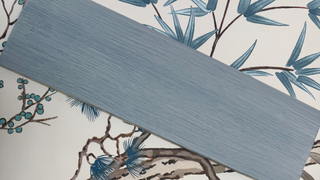
A Timeless Technique for Elegant Interiors
1. The Origin and Meaning
The word Strié (pronounced stree-AY) comes from the French verb strier, which means to streak or to stripe. This decorative painting technique was designed to imitate the fine texture of woven fabrics such as silk or linen.
It first gained popularity in 18th-century France, when artisans used it to add refinement and visual texture to walls, furniture, and architectural trim. The technique gives a space an understated elegance—adding depth and movement without drawing too much attention.
You can see historic examples of this finish in places like:
-
The Frick Collection in New York City — where trimwork and paneling showcase a restrained, graceful strié effect that inspired today’s lesson.
-
The Palace of Versailles — where artisans used glazing and strié to create the illusion of draped textiles on wooden panels.
-
Historic French and English estates — where horizontal strié on wainscoting and cabinetry lent warmth and texture to otherwise formal rooms.
The hallmark of a beautiful strié is subtlety. The goal is to create an impression of refined age and craftsmanship—not a heavy or streaky texture. The best strié looks soft, slightly worn, and timeless.
2. Preparing Your Surface
This technique works beautifully on trim, cabinetry, furniture, and frames—anywhere you want a polished, classic texture.
-
Clean the Surface:
Begin by cleaning thoroughly with Clean Slate. This removes wax, grease, oils, and residues from cleaners or cosmetics. A clean surface ensures proper paint adhesion and durability. -
Apply Your Base Coat:
Use Miracle Paint, a water-based enamel that levels beautifully when brushed or sprayed.-
Avoid rolling—rollers create a texture that disrupts the horizontal lines of the strié.
-
Apply 1–2 coats for solid coverage.
-
Allow 2–4 hours of dry time between coats.
-
Lightly sand after your final coat to ensure a smooth surface for glazing.
-
3. Mixing the Strié Glaze
The glaze is what brings this finish to life. It adds transparency, movement, and dimension.
Mixing Ratio:
-
2 parts Glazed Over
-
1 part Miracle Paint (in your chosen top color)
Mix thoroughly until the color is smooth and even. You can use any of the Manor Borne wall colors, now available in Miracle Paint, giving you countless classic color combinations.
4. Applying the Glaze
-
Brush on your glaze using a sponge brush—this ensures a smooth layer without brush marks.
-
Work in small sections—about a drawer front, cabinet door, or trim panel at a time—because glaze can begin to set quickly.
-
While the glaze is still wet, pull the glaze using a synthetic brush in horizontal strokes to create the fine strié lines.
Tips for Success:
-
Wipe your brush frequently with a clean rag. You want it damp but not loaded with glaze; too much product turns the brush into a positive tool instead of a negative one.
-
Keep your strokes consistent in direction and pressure.
-
If you want more visual texture, you can crosshatch—pulling the glaze horizontally first, then vertically—creating a subtle woven or denim effect.
5. Finishing Touches
Once your glaze has dried completely, you can leave it as-is for a classic satin look, or add soft layers of wax or gilding for added depth.
A few beautiful color combinations from today’s session:
-
Base Coat: Best of You
Top Glaze: Selznick Gray -
Base Coat: Daddy’s Girl
Top Glaze: Glover Gray
Finished with Dust of Ages and Mind Your Own Beeswax for a refined patina. -
Base Coat: Summer Regatta
Top Glaze: High Hampton Getaway -
Base Coat: Birdie’s Song
Top Glaze: Rain Please Go Away
Pulled in both directions for a soft denim effect.
Remember, your first color—the base coat—is what peeks through and defines the movement of your strié, while the glaze adds transparency and tone. Experiment with complementary or monochromatic pairings for different moods.
6. No Topcoat Needed
Because Miracle Paint is a durable water-based enamel, there’s no need for an additional sealer or wax. Once your glaze has cured, the surface is fully protected.
This technique can be applied to:
-
Walls and trims
-
Cabinetry and vanities
-
Furniture and frames
-
Mats or panels
It’s a finish that never goes out of style—seen in countless French antiques and European interiors. Elegant, timeless, and understated, Strié remains one of the most sophisticated finishes you can master.
